

By now you may have heard about the recent decision by the White House to switch fonts for their communication. It seems they reversed a Biden-era decision to replace Times New Roman with Calibri because they felt Calibri catered to a culture and philosophy the current administration doesn’t care to cater to. The decision seemed borne of ignorance. Secretary of State Marco Rubio called the change to Calibri “wasteful” and said it “achieved nothing except the degradation of the department’s official correspondence.”
As a designer, this news story jumped out at me. I’ve seen how choices in typography can make or break communication. Fonts are an aesthetic choice, certainly, but the number one factor when selecting a font is the audience, not the speaker.
For background, Times New Roman was designed in the 1930’s to be used on printed newspapers. It was digitized in the early days of computer literacy, but the letter spacing, stroke widths, and serif designs were never meant for pixel display. Calibri, on the other hand, was designed in 2006 specifically for screen display. The letter shapes and spacing are easy to read at any point size, and work so well that Microsoft made it the default font for Word.
Getting back to the audience, the audience of White House communications includes everyone in the United States, and potentially beyond. It includes people of all ages, people with visual impairments (even if that’s just reading glasses), busy individuals who don’t have time to decipher around fine serifs and poor digital spacing, and those who have grown up in the digital age. This makes readability the number one most important goal of any chosen typeface. That’s why reverting to Times New Roman struck me as a perplexing choice — it shoots the goal of “communication” in the foot.
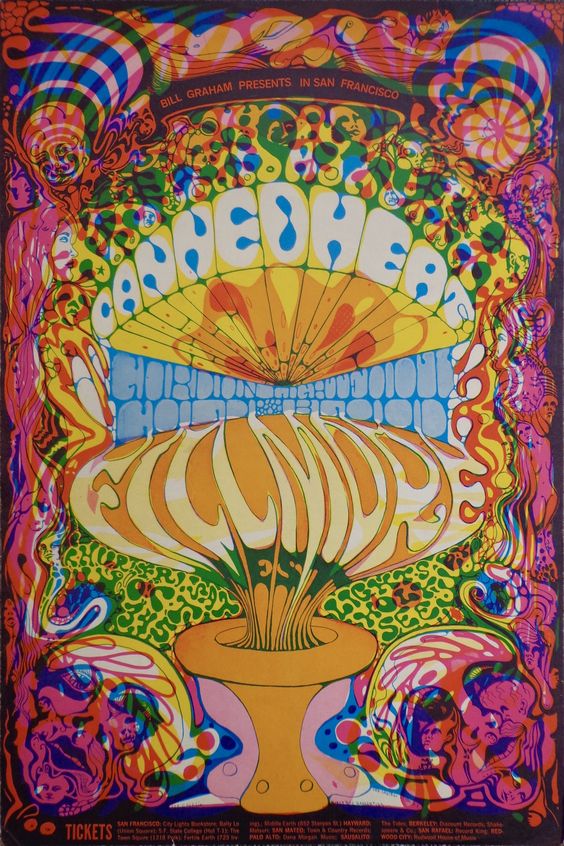 An example of playing with letter legibility: Canned Heat concert poster by Lee Conkin, 1968 - Link
Fonts Are Table Stakes for Usability
Often, the reasons for debating fonts feel real to team members but aren’t tied to how people actually read or engage with content. There are two components to how our brains look at words:
- Legibility. This is how easy it is to distinguish one individual letter from another. Legibility can be fun to play with on posters, headlines, and graphic illustrations.
- Readability. This is how easy it is to decipher and absorb the meaning of the text. Readability is critical for paragraphs and longer articles, and for websites & social posts where users typically need to be “hooked” in the first second or two.
Note that both legibility and readability can be influenced by things other than font choice (background images, color contrast, punctuation and sentence structure). Politics aside, readability should typically be the baseline in business communication, and good readability is a performance advantage. When people can read content easily, they understand it faster, which gives them more time to think about it, and act on it.
Fonts Can Be Strategic Business Decisions
There is no universally superior font, Calibri or otherwise. The right choice depends on context, audience, and business objectives. Typography communicates volumes before a single word is read. It signals who the message is for, how credible the brand is, and how much effort it will take to consume the information. When font decisions are made based on tradition, internal preference, or aesthetics alone, organizations unintentionally ask their audience to work harder than necessary.
Consistency Builds Credibility
Smart brands treat typography as a system, not a collection of individual choices. That system builds familiarity, which builds confidence, which ultimately builds trust. I don’t usually like using the words “trust” and “marketing” in the same breath, since much of marketing comes across as hype. (Every sales rep is #1, every product is “superior,” every store has “the best” prices, etc.) But inconsistent font use that makes your marketing materials drift from style to style can tip off your audience that you aren’t legitimate. Or worse, that you don’t care. Inconsistency doesn’t just look sloppy; it creates uncertainty and makes people question whether the content is official or trustworthy.
 The Apple brand has great readability and consistency of application
Why Friction Matters More Than Ever
Unlike newspaper readers in the 1930’s, audiences today make decisions in seconds. Social media, display ads, email subject lines, and even video thumbnails leave almost no room for confusion. Typography must instantly signal the intended audience, reinforce brand recognition, and communicate tone. Seemingly minor readability issues can add up. If your fonts aren’t optimized for readability, your competitors can steal the attention of your potential customers, and can leave your business behind. Font choices can even influence AI discoverability, because content that is hard to read typically has lower human engagement, which in turn can affect whether AI tools will surface it as a search result.
The Bottom Line
Fonts are not just aesthetic, they’re key to engaging your audience. They are the infrastructure that supports readability, trust, and engagement. Choosing fonts without understanding your audience, context, and medium can be a costly mistake. Legibility, readability and consistency are the baseline. Get these right, and your brand can focus on bigger priorities, scale smarter, and communicate more effectively.
WebSight Design is a full-service digital agency delivering website design and development, digital marketing, SEO, content strategy, UX and UI design, and integrated technology solutions. We evaluate typography as part of a broader brand and usability strategy grounded in audience behavior, accessibility, and measurable outcomes.
We help organizations ensure their design decisions reinforce their marketing strategy rather than undermine it. If you are unsure whether your typography choices are supporting your digital performance, we can help. Contact us to get started.
About the author
Stephanie Long has over 25 years of experience leading design and front-end production for digital brands. She specializes in translating business objectives into clear, usable, and intentional designs, with a particular passion for typography and digital readability. She is the Creative Director at WebSight Design.
Connect with Steph on LinkedIn
Explore more insights
Follow WebSight Design on LinkedIn
Frequently Asked Questions (FAQs)
Why do font choices matter for business websites?
Font choices affect how quickly and easily users can process information. Poor typography reduces engagement, trust, and conversion rates—even if the content itself is strong.
Are serif fonts bad for websites?
No. Many modern serif fonts are designed for digital use. The issue is using outdated fonts that are not optimized for screens, or modern content consumption.
How does typography affect brand trust?
Consistency and readability signal professionalism and credibility. When fonts are hard to read or inconsistent, users subconsciously question the legitimacy of the content.
Is readability really that important if my audience doesn’t have disabilities?
Yes. Readability improves the experience for everyone, especially mobile users, older audiences, and distracted readers. It directly supports better performance metrics.